
When you pick up a Coach bag, do you wonder: Where are Coach bags made today? Are they still made in China? Does the country on the tag affect quality? Or maybe you just want to know how to tell a real Coach from a fake.
Whether you are a shopper looking for your next bag or a buyer sourcing handbags to resell, the country of origin is tied directly to your authenticity checks and purchasing decisions.
As a sourcing agent based in China working with leather goods factories every week, we will break down Coach’s real production setup, show you how to read the tag, and explain the fakes that most buyers miss.
A Quick Background on Coach

Coach was founded in New York in 1941 as a six-person leather workshop on 34th Street in Manhattan. For decades, it built a reputation on sturdy, workwear-style American craftsmanship.
By the late 1990s, Coach had repositioned itself as the world’s leading “affordable luxury” brand, offering designer quality at prices far below European houses like Hermès or Louis Vuitton.
To control costs and meet rising global demand, Coach shifted its manufacturing base out of the United States during the 1990s and 2000s. Today, less than 5% of Coach production remains on American soil, limited to heritage re-issues.
Where Are Coach Bags Made Now as of 2026?
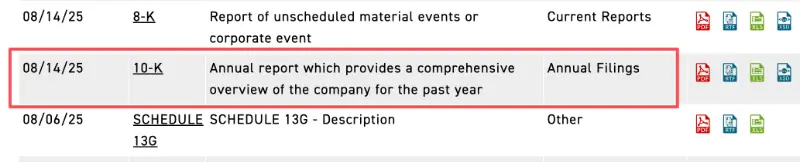
Per Tapestry, Inc.’s fiscal 2025 Annual Report filed with the U.S. Securities and Exchange Commission on August 14, 2025, Coach bags are currently manufactured in four countries: Vietnam, Cambodia, the Philippines, and India.
Two facts here surprise most readers. China is no longer a primary Coach manufacturing country (it dropped off the official list after 2020). And India was recently added (appeared around 2024), mostly for specialty leather work.
Vietnam: The Core of Coach’s Production Today
Vietnam is Coach’s largest manufacturing hub as of 2026. Most modern styles, including the Tabby, Brooklyn, Empire, and Willow lines, are assembled here.
- Volume leader: Responsible for the bulk of Coach’s current handbag output.
- Key supplier: Taiwan-owned Fulin Plastic Industry (based in Haiphong since 1997) supplies roughly half of the synthetic leather used in Coach bags.
- Why Vietnam: Skilled workforce, cost-effective labor, and favorable trade agreements. The 2018 U.S.-China tariff war accelerated the shift.
Cambodia: The Diversification Base
Cambodia handles mid-range bags and small leather goods. Factories here combine semi-automated production with skilled hand-finishing, keeping mid-tier pricing competitive.
- Role: Balances Coach’s supply chain risk by reducing dependence on any single country.
- Trade advantage: Preferential access to U.S. and EU markets via the Generalized System of Preferences.
The Philippines: Hand-Stitched Detail Work
The Philippines specializes in detailed hand-stitching and canvas work. Coach has manufactured here since at least 2010, when Hong Kong-based Luen Thai Holdings publicly announced its Coach production partnership.
- Strengths: Skilled leatherworkers, strong textile tradition, reliable workforce stability.
- Manufacturing partner: Luen Thai acquired dedicated handbag production capability in 2008 and remains a major supplier to Coach, Michael Kors, and Tory Burch.
India: Specialty Leather and Coachtopia
India was added as a primary Coach manufacturer around 2024. It plays a specialized role, not a mass-production one.
- Anchor partner: KH Exports in Chennai, a family-run leather manufacturer that has worked with Coach since 1987 — one of the longest-standing relationships in Coach’s supply chain.
- Specialty work: Men’s wallets, belts, jewelry, and the Coachtopia sustainable line using upcycled leather scraps.
- Confirmed on camera: Coach’s own 2024 docuseries “The Road to Circularity” features the KH Exports factory directly.
In short, Coach assigns orders to the most suitable country based on design complexity, volume, and cost. The country on the tag is not a quality indicator. It’s the result of Coach’s global supply chain strategy.
Related Topics:
How to Check Where a Coach Bag Was Made?
To check your Coach bag’s country of origin, you can trace it in 2 ways.
1. Find the “Made in” cloth tag.
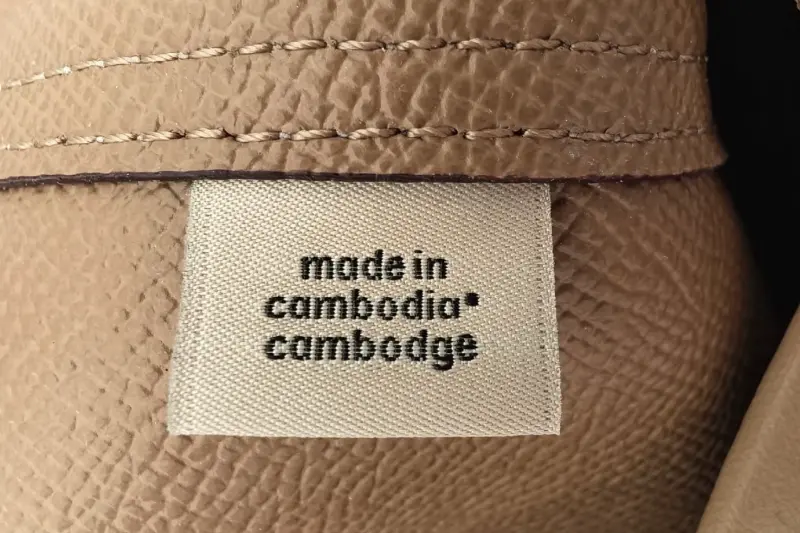
Look inside the bag along the lining seams or in the corner of an interior pocket. You’ll see a small cloth tag, usually brown or black with white lettering, that reads “Made in Vietnam,” “Made in China,” “Made in Cambodia,” or similar. On most modern Coach bags, this is the primary place the country is explicitly stated.
One thing to keep in mind, if you see Made in PRC, it’s a red flag. The United States has stipulated that imported products must clearly indicate their country of origin. So Made in China is correct, although PRC=China.
2. Check the Serial Number on Creed Patch

The creed patch inside most Coach handbags carries a serial number formatted like H2354-5696:
- H stands for Month.
- 23 stands for Manufacturing Year.
- 54 stands for Manufacturing location code.
- 5696 stands for the Style Number.
In this case, according to 54, this bag is made in Cambodia. We’ve collected some common origin codes for your reference:
- China: 20, 67, 73, 90, 201
- Vietnam: 57, 61, 80, 81, 92
- India: 08, 36, 44
- Myanmar: 23, 30, 66, 97
- Bangladesh: 96, 98
- Cambodia: 11, 22, 40, 54, 79, 91
- The Philippines: 21, 32, 47, 77, 78
- Indonesia: 39, 200, 202
Does Coach Bag Quality Vary by Country?
No. Coach enforces identical quality standards across every factory. The country on the tag reflects where final assembly happened — nothing more.
Three systems guarantee this:
1. Centralized Material Sourcing
Coach centrally approves all raw materials (leather, lining, zippers, hardware) before they enter any factory. Every Coach bag uses YKK zippers (Japan’s Yoshida Kogyo, the industry standard since 1934).
2. Unified Manufacturing Standards
Every factory must follow the same detailed specifications: stitch density, glue application, edge painting, and assembly tolerances. Vietnam, Cambodia, the Philippines, and India all work from one playbook.
3. Final Inspection Gate
Every bag passes Coach’s unified quality inspection before shipment. A bag that fails inspection at any factory doesn’t leave the building.
Coach has also committed to sourcing 90% of its leather from Silver- or Gold-rated tanneries certified by the Leather Working Group, covering environmental and ethical standards across the supply chain.
In practice, a Coach Tabby assembled in Vietnam and one assembled in the Philippines should feel and perform identically.
How to Check If Your Coach Bag is Real?
A 4-point authentication guide for quick reference:
1. The Creed Patch (Most Important)

Real:
- Leather feels soft, supple, and has natural grain.
- Stamped letters are crisp, deep, and have a subtle indentation around each letter.
- Font and spacing are consistent.
Fake:
- The patch feels stiff, plastic-like, or has a chemical smell.
- Printing appears blurry, too shallow, or uses the wrong font.
- Red flag: “Made in Korea” = 100% fake. Coach has never produced handbags in Korea and has a long legal history of suing Korean counterfeiters. Treat Thailand origin with similar suspicion.
- Watch for Italy. Most “Made in Italy” Coach bags today are fakes, but there is a legitimate exception. Between 1992 and 1998, Coach produced high-end collections (Madison, Sheridan, Dakota, Gramercy, Bridle, Sonoma) at a dedicated Italian facility. Genuine pieces from these lines do carry “Made in Italy” stamps. A few exotic-leather pieces are still made in Italy today. However, a paper “Coach Italy” hangtag with no creed stamp is a common fake marker.
2. Hardware Engraving

Real:
- Clean, precise engraving on a smooth metal surface.
- Consistent font with sharp edges.
- High-quality finish — warm gold or crisp silver, not dull or overly yellow.
Fake:
- Blurry or wavy lines inside the letters.
- Rough, uneven edges on the engraving.
- Metal finish looks too shiny, too pale, or too yellow.
3. The Leather Feel

Real:
- Supple with natural grain variation.
- Develops a soft patina over time.
- Has a subtle leather scent, not chemical.
Fake:
- Stiff feel, often with a strong chemical odor.
- Grain pattern looks artificially uniform.
- No patina development after months of use.
4. Outlet vs Retail (A Bonus Check)
Not every discounted Coach is a fake — but it’s worth knowing which is which. Look at the creed:
- Bullet or target symbol “•” = a full-price boutique bag later transferred to outlet sale.
- Letter “F” after the dash in the style number (e.g., -F11674) = Made for Factory, produced specifically for outlet.
- “FS” or double bullet = final sale, no returns accepted.
Dust bags ship with full-price boutique bags only. If your Coach arrived without a dust bag, it was likely an outlet (MFF) product, not a fake.
When in Doubt
The safest path is always to buy from Coach’s official store, the coach.com website, or authorized retailers. If you already own a bag and have doubts, you can bring it to a Coach boutique — staff can share their opinion, though they don’t issue official authentication certificates.
Final Thoughts: Beyond Where Are Coach Bags Made
Understanding Coach’s production setup does more than answer a shopping question. It reveals how a global brand runs a complex, multi-country supply chain while protecting a consistent product experience.
For wholesalers and retailers, this is the real lesson: quality does not come from geography. It comes from centralized material sourcing, unified production standards, and disciplined final inspection. Any sourcing strategy, whether for Coach or for your own brand, should start from those three levers.
If you’re looking to source handbags or leather goods from China or Southeast Asia with the same supply chain rigor Coach applies, HiSourcing can help you identify certified factory partners, run quality inspections, and build a reliable sourcing operation.
Ready to build your sourcing strategy? Contact HiSourcing today.
Further Reading:
- 45 Different Types Of Bags: Names, Pictures, Uses
- Made in PRC: What Does It Mean?
- 15 Best Chinese Replica Websites: Clothes/Shoes/Bags/Watches/Electronics
- 10 Top China Wholesale Markets: Bags/Shoes/Clothes & More
- 30 Best Profitable Products to Import from China in 2026
- Where Are Skechers Shoes Made?
- Where Are Stanley Cups Made?
- Why is Everything Made in China?


