
The main blanket material types include fleece, wool, sherpa, cotton, cashmere, linen, flannel, microfiber, polyester, bamboo-derived rayon or lyocell, acrylic, minky, faux fur, down, down alternative, chenille, silk, alpaca, hemp, and velvet or velour.
This guide from HiSourcing compares 20 blanket fabrics and materials, helping you choose the best material for blankets according to your specific needs.
Decision Snapshot:
| Decision | Best material candidates | Why they fit |
|---|---|---|
| Warmest winter blanket | Wool, sherpa, fleece, down alternative | Strong insulation and heat retention |
| Softest feel | Cashmere, minky, sherpa, fleece, chenille | Plush pile or fine-fiber hand feel |
| Breathable summer blanket | Cotton, linen, bamboo-derived rayon or lyocell, hemp | Better airflow or moisture behavior |
| Baby blanket | Cotton, bamboo-derived fabrics, minky, soft fleece | Soft hand feel and easier care |
| Throw blanket | Fleece, sherpa, cotton, acrylic, cashmere, chenille | Comfort, decor, and broad price range |
| Luxury blanket | Cashmere, wool, alpaca, silk | Premium fibers and higher perceived value |
| Custom or bulk blanket | Fleece, polyester, microfiber, sherpa, flannel | Scalable cost, colors, availability, and decoration options |
Blanket Material Comparison Table
Use this table to compare blanket fabrics by warmth, softness, breathability, durability, care, cost, and best use before reading the individual material sections.
| Material | Category | Warmth | Softness | Breathability | Durability | Care | Cost | Best for | Watch-out |
|---|---|---|---|---|---|---|---|---|---|
| Fleece | Fabric finish, often polyester | High | High | Low to medium | Medium | Easy | Low to mid | Winter throws, bulk blankets | Static, pilling, microfiber shedding |
| Wool | Animal fiber | High | Medium to high | High | High | Medium | Mid to high | Winter, premium blankets | Itch, shrinkage, gentler washing |
| Sherpa | Plush pile fabric | High | High | Low to medium | Medium | Medium | Low to mid | Cozy throws, winter gifts | Matting, pile quality |
| Cotton | Plant fiber | Low to medium | Medium | High | High | Easy | Low to mid | Baby, summer, all-season | Less insulating unless thick |
| Cashmere | Animal fiber | Medium to high | Very high | Medium | Medium | Delicate | High | Luxury throws | Price, delicate care |
| Linen/flax | Plant fiber | Low to medium | Medium | High | High | Medium | Mid to high | Summer, natural bedding | Wrinkles, less plush feel |
| Flannel | Brushed fabric | Medium | High | Medium | Medium | Easy to medium | Low to mid | Cozy cotton blankets | Shrinkage, pilling |
| Microfiber | Fine synthetic fiber | Medium | High | Low to medium | Medium | Easy | Low | Budget bedding, easy care | Static, lower airflow |
| Polyester | Synthetic fiber | Medium | Varies | Low to medium | High | Easy | Low | Custom, printed, bulk blankets | Heat retention, static |
| Bamboo-derived rayon/lyocell | Manufactured cellulose | Low to medium | High | Medium to high | Medium | Medium | Mid | Hot sleepers, soft bedding | Labeling accuracy, care |
| Acrylic | Synthetic fiber | Medium | Medium | Low to medium | Medium | Easy | Low to mid | Wool-like budget blankets | Pilling, static |
| Minky/cuddle plush | Plush knit fabric | Medium | Very high | Low | Medium | Medium | Mid | Baby blankets, soft throws | Stretch, shedding, sewing control |
| Faux fur | Pile fabric | High | High | Low | Medium | Medium | Mid | Decorative throws | Shedding, bulky care |
| Down | Natural fill | High | Soft loft | Depends on shell | Medium | Delicate | High | Lightweight warmth | Fill care, allergy/animal concerns |
| Down alternative | Synthetic fill | Medium to high | Soft loft | Depends on shell | Medium | Easier than down | Mid | Warm washable blankets | Fill quality varies |
| Chenille | Textured yarn/fabric | Medium | High | Medium | Medium | Medium | Mid | Decorative throws | Snagging, shedding |
| Silk | Animal fiber | Low to medium | Very high | Medium to high | Low to medium | Delicate | High | Luxury lightweight blankets | Cost, delicate washing |
| Alpaca | Animal fiber | High | High | Medium to high | High | Medium | High | Premium natural throws | Availability, price |
| Hemp | Plant fiber | Low to medium | Medium | High | High | Medium | Mid | Durable natural blankets | Less plush unless blended |
| Velvet/velour | Pile fabric/finish | Medium | High | Low to medium | Medium | Medium | Mid | Decorative soft blankets | Crush marks, appearance care |
20 Blanket Material Types Explained
The 20 sections below compare common blanket fabrics, luxury fibers, plush finishes, and fill materials. Each material has a different balance of warmth, softness, breathability, care, cost, and production risk.
1. Fleece

Fleece is a soft, brushed fabric finish that is usually made from polyester. It is one of the most common blanket material types because it feels warm, dries quickly, is affordable, and works well for throws, promotional blankets, stadium blankets, and custom blankets.
Fleece traps warmth without much weight, so it is practical for winter lounging and bulk gifting. It is also easy to color and often easier to wash than wool or cashmere. The tradeoff is breathability. Lower-quality fleece can pill, build static, or shed microfibers during use and washing.
- Best for: affordable winter blankets, promotional gifts, easy-care throws, custom bulk orders.
- Watch out for: pilling, static, thin GSM, weak edge stitching, and microfiber shedding.
2. Wool
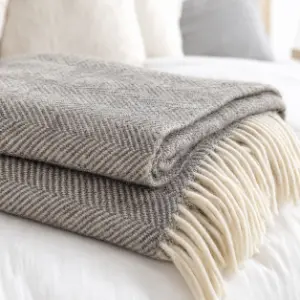
Wool is a natural animal fiber valued for warmth, insulation, breathability, and moisture management. For winter blankets, wool is often a stronger long-term choice than a very cheap synthetic because it can hold warmth while still allowing better temperature regulation.
Wool blankets can feel dense, structured, and durable. Merino wool is generally finer and softer than coarser wool, while blended wool blankets can reduce price or improve washability. The main watch-outs are itch, shrinkage, moth damage, and care. Some wool blankets need dry cleaning or careful cold washing, depending on the weave and finish.
- Best for: winter blankets, premium throws, natural-fiber bedding, colder climates.
- Watch out for: sensitive skin, shrinkage, high heat drying, and unclear wool content.
3. Sherpa
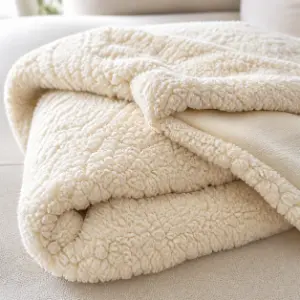
Sherpa is a plush pile fabric designed to imitate the fluffy texture of sheep fleece. Many sherpa blankets are polyester-based, often paired with fleece, microfiber, or flannel on the reverse side.
Sherpa feels thick, soft, and instantly cozy, which makes it popular for winter throws and gift blankets. It is warmer than many flat-woven fabrics because the pile creates loft and traps air. The downside is maintenance. Poor-quality sherpa can mat, flatten, or shed after washing, especially if exposed to high heat.
- Best for: cozy winter throws, reversible blankets, gift products, plush retail blankets.
- Watch out for: matting, shedding, bulky packaging, and low pile density.
4. Cotton
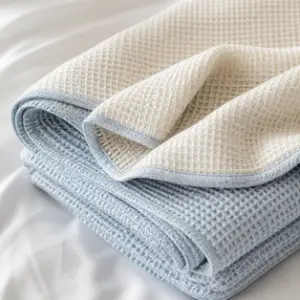
Cotton is a natural plant fiber used in many blanket fabric types, from baby blankets and waffle blankets to thermal blankets, muslin blankets, and cotton flannel. It is breathable, washable, familiar, and comfortable for everyday use.
Cotton is not automatically the warmest blanket material, but it is one of the most versatile. A light cotton weave can work well for summer or hot sleepers, while a heavier waffle, thermal, or flannel construction can add warmth. Cotton is also useful for baby products because it is soft, washable, and widely understood by consumers. For custom production, confirm shrinkage, weight, weave, and whether pre-washing or sanforizing is needed.
- Best for: baby blankets, summer blankets, all-season home blankets, breathable bedding.
- Watch out for: shrinkage, wrinkling, and weak insulation in thin weaves.
5. Cashmere

Cashmere is a luxury animal fiber from cashmere goats. It is prized for its soft hand feel, light weight, and warmth, which is why cashmere blankets are often positioned as premium gifts or luxury home products.
Cashmere can feel warmer than expected for its weight because the fibers are fine and insulating. It is not the right material for low-cost promotions or rough daily washing. A cashmere blanket needs careful care, clear fiber-content labeling, and realistic customer expectations. Blends can lower cost, but they also change softness, durability, and perceived value.
- Best for: luxury throws, premium retail, high-end gifts, soft natural-fiber blankets.
- Watch out for: high cost, delicate care, pilling, and misleading blend claims.
6. Linen / Flax
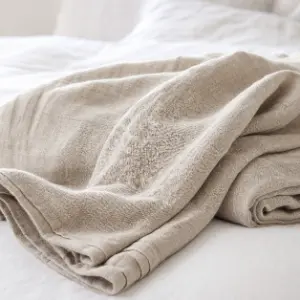
Linen is made from flax fiber and is best known for breathability, texture, durability, and a cooler feel. It is not the plushest blanket material, but it is useful for warm climates, summer layering, and natural bedding collections.
Linen usually feels crisp or textured at first and softens with use. It absorbs moisture and releases it relatively well, which helps it feel less heavy in humid or warm conditions. The tradeoff is appearance and softness. Linen wrinkles easily, can feel less smooth than cotton or bamboo-derived fabrics, and may need blending or finishing if the target customer expects a soft first touch.
- Best for: breathable summer blankets, natural home collections, textured throws.
- Watch out for: wrinkles, rough initial hand feel, and higher cost than basic cotton.
7. Flannel
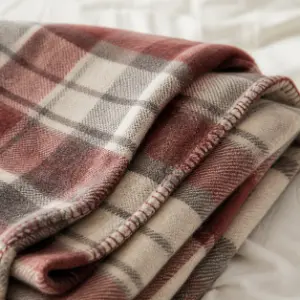
Flannel is a brushed fabric, often made from cotton, wool, polyester, or blends. The brushing process raises fibers on the surface, creating a soft, fuzzy hand feel that works well for cooler seasons.
Cotton flannel blankets feel warmer and cozier than plain cotton because the brushed surface traps more air. Polyester flannel can be cheaper and easier to maintain, while wool flannel can be warmer but more care-sensitive. For sourcing, confirm the fiber content, brushing quality, shrinkage, and pilling resistance. “Flannel” describes the construction and finish, not one single fiber.
- Best for: cozy bedding, fall and winter blankets, affordable soft throws.
- Watch out for: shrinkage, lint, pilling, and vague fiber labeling.
8. Microfiber
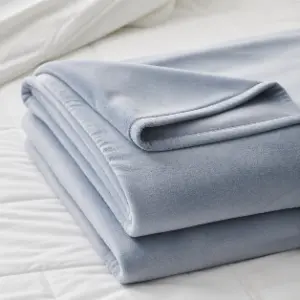
Microfiber is made from very fine synthetic fibers, most often polyester. It is soft, smooth, affordable, and common in bedding because it can feel pleasant at a low price point.
Microfiber blankets are usually easy to wash, quick to dry, and available in many colors. They can be useful for budget home blankets, hospitality, ecommerce bedding, and custom products. However, microfiber is not always as breathable as cotton or linen, and lower-quality versions may hold static or feel clammy to hot sleepers. In bulk production, fabric weight and finishing quality make a large difference.
- Best for: budget bedding, easy-care blankets, hospitality, custom programs.
- Watch out for: static, low breathability, thin fabric, and pilling.
9. Polyester
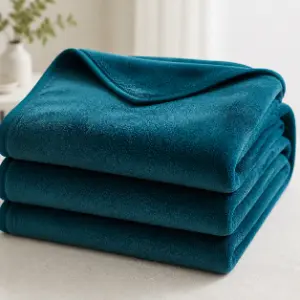
Polyester is a synthetic fiber family behind many blanket fabrics, including fleece, microfiber, sherpa, minky, faux fur, and some velvet or velour. A 100% polyester blanket can be good or bad depending on construction, GSM, finishing, and use.
Polyester is durable, affordable, colorfast, and scalable for custom or bulk blanket production. It is often a smart choice for promotional blankets, printed blankets, and easy-care throws. The tradeoff is comfort in heat. Polyester usually breathes less than cotton, linen, or wool, and it can build static. It may also pill or shed if the yarn, brushing, or finishing is weak.
- Best for: custom blankets, easy-care throws, budget retail, strong color options.
- Watch out for: breathability, static, pilling, and overly thin fabric specs.
10. Bamboo-Derived Rayon, Viscose, or Lyocell
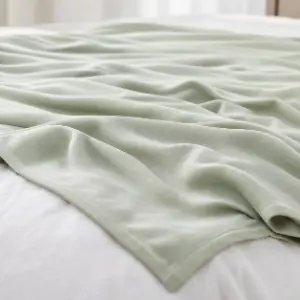
Many “bamboo” blanket fabrics are not raw bamboo fiber. They are usually rayon, viscose, or lyocell made from bamboo-derived cellulose. The FTC warns that bamboo textile labeling should accurately describe the fiber, so draft and product copy should avoid implying the fabric is natural bamboo unless that is actually true.
These fabrics can feel smooth, soft, and cool to the touch. They are often chosen for summer blankets, hot sleepers, and soft bedding. Lyocell may be positioned as a more premium manufactured cellulose option, but care instructions still matter. Confirm the exact fiber name, blend, shrinkage behavior, and wash method before using cooling or sustainability language.
- Best for: soft summer blankets, hot sleepers, smooth lightweight bedding.
- Watch out for: inaccurate “bamboo” claims, shrinkage, and unsupported eco claims.
11. Acrylic
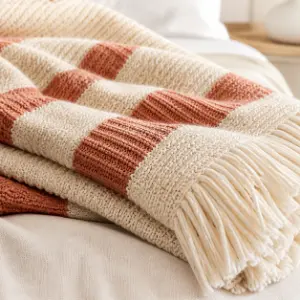
Acrylic is a synthetic fiber often used as a wool-like alternative. It can be lightweight, warm, color-retentive, and lower cost than wool, which makes it useful for budget throws and decorative blankets.
Acrylic can mimic some of wool’s loft and appearance, but it does not perform exactly like wool. It is usually less breathable and can pill or build static. For private-label or retail programs, acrylic can work when the goal is a bright, affordable, easy-care blanket with a knit or wool-like look.
- Best for: budget decorative throws, wool-like blankets, colorful blanket programs.
- Watch out for: pilling, static, lower breathability, and heat sensitivity.
12. Minky / Cuddle Plush
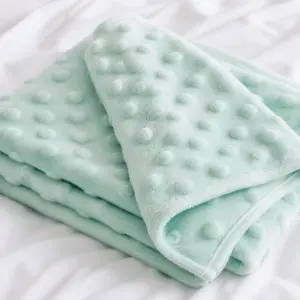
Minky, sometimes called cuddle plush, is an ultra-soft plush knit fabric that is commonly polyester-based. It is especially popular for baby blankets, soft throws, and comfort-focused products because the surface feels smooth, velvety, and plush.
Minky is one of the softest blanket material fabric options, but it needs production care. It can stretch, shift, shed at cut edges, or show quality differences in pile height and backing. For baby blankets, softness is only one factor. Also confirm construction, trim, shedding, label requirements, and destination-market safety expectations.
- Best for: baby blankets, plush throws, soft-touch gifts, comfort blankets.
- Watch out for: shedding, stretch, sewing difficulty, and low-quality backing.
13. Faux Fur
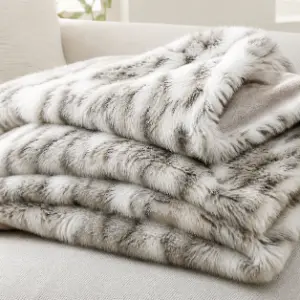
Faux fur is a pile fabric designed to imitate the look and feel of animal fur. It is usually synthetic and is a better fit for a mainstream US-facing guide than real mink or rabbit fur.
Faux fur blankets feel plush, decorative, and warm. They work well for fashion-led throws, holiday collections, and higher-perceived-value home decor. The main risks are shedding, pile direction, bulky shipping, and care. A low-quality faux fur blanket can lose fibers or look flat quickly, so pile density and backing quality matter.
- Best for: decorative throws, plush winter blankets, giftable home products.
- Watch out for: shedding, heavy bulk, matting, and difficult washing.
14. Down
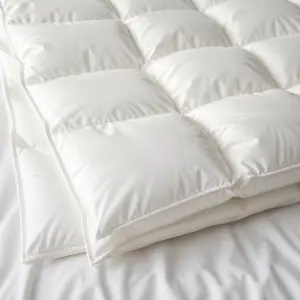
Down is a natural fill, not a surface fabric. It is used inside blankets, comforters, and throws to create light, lofty warmth. The shell fabric may be cotton, microfiber, polyester, or another tightly woven material.
Down can feel warm without being heavy, but it is expensive and more care-sensitive than many synthetic fills. It also raises animal-product, allergy, and labeling concerns for some buyers. If you are sourcing down-filled blankets, confirm fill content, fill distribution, shell quality, odor control, and care instructions.
- Best for: lightweight warmth, premium filled blankets, colder climates.
- Watch out for: labeling, fill migration, allergies, animal-product concerns, and delicate care.
15. Down Alternative
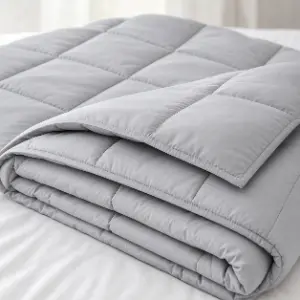
Down alternative is a synthetic fill designed to mimic some of the loft and softness of down. It is usually polyester-based and often easier to wash, easier to source, and more affordable than natural down.
The quality range is wide. A good down alternative blanket can feel warm and lofty, while a cheap one may flatten quickly or distribute fill unevenly. For custom production, ask about fill weight, quilting or box construction, shell fabric, and whether the fill shifts after washing.
- Best for: warm washable blankets, animal-free down-like loft, mid-price bedding.
- Watch out for: fill clumping, uneven warmth, bulky packaging, and low fill quality.
16. Chenille
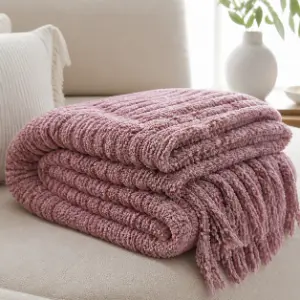
Chenille is a textured yarn or fabric with a fuzzy pile. In blankets, it gives a soft, decorative, slightly dimensional look that works well for throws and baby products.
Chenille can feel cozy and visually rich, especially in knit or woven throw blankets. It is less technical than wool or down, but it adds strong texture. The drawbacks are snagging, shedding, and care. Loose yarn structures can pull if used roughly, so it is better for decorative or moderate-use blankets than heavy-duty utility blankets.
- Best for: decorative throws, soft textured blankets, giftable home decor.
- Watch out for: snagging, shedding, loose yarns, and durability in rough use.
17. Silk
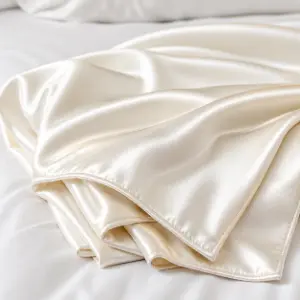
Silk is a luxury natural protein fiber with a smooth, light, refined hand feel. In blankets, it is more of a premium or specialty choice than a mass-market everyday material.
Silk can feel smooth and temperature-comfortable, but it is delicate and expensive. It does not suit heavy washing, pets, rough daily use, or low-cost bulk programs. Silk can work for luxury lightweight blankets or blends, but the care label and customer expectations need to be very clear.
- Best for: luxury lightweight blankets, premium gifts, smooth bedding layers.
- Watch out for: delicate care, high cost, abrasion, and water spotting.
18. Alpaca
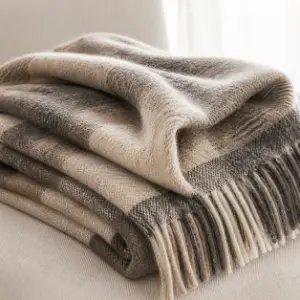
Alpaca is a premium animal fiber used in luxury throws and natural-fiber blankets. It is often compared with wool and cashmere because it can feel warm, soft, and lightweight.
Alpaca is a strong option when the product needs a premium story and natural warmth. It can be less common and more expensive than standard wool, so it is not ideal for low-cost programs or very large promotions. Avoid broad hypoallergenic claims unless the supplier provides evidence and the wording is legally safe for your market.
- Best for: premium natural throws, luxury retail, warm lightweight blankets.
- Watch out for: price, limited availability, care, and unsupported sensitivity claims.
19. Hemp

Hemp is a natural plant fiber known for durability and breathability. It is less common in mainstream blanket aisles than cotton, fleece, or wool, but it can support a natural or eco-conscious product position when sourced and described carefully.
Hemp blankets may feel more textured than plush unless the fabric is blended, washed, or softened. Hemp can work for lightweight blankets, summer layers, and durable natural bedding concepts. Do not overstate sustainability benefits without verified sourcing, processing, and certification details.
- Best for: breathable natural blankets, durable summer layers, niche eco-positioned products.
- Watch out for: rougher texture, higher cost, and unsupported sustainability claims.
20. Velvet / Velour
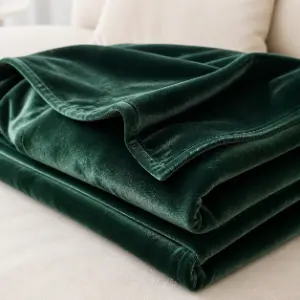
Velvet and velour are pile fabrics or finishes, not single fibers. Many modern velvet or velour blankets are polyester-based, though other fibers or blends are possible.
These fabrics feel smooth, soft, and decorative. They are popular for fashion throws, lightweight plush blankets, and giftable home products. The main issue is appearance care. Velvet or velour can show crush marks, direction changes, lint, or shine differences. For bulk production, confirm pile quality, backing, wash behavior, and color consistency.
- Best for: decorative throws, smooth plush blankets, fashion-led retail.
- Watch out for: crush marks, lint, pile direction, and care sensitivity.
How to Choose the Best Fabric for Blankets
The best fabric for blankets depends on season, user group, softness preference, care requirements, quality level, budget, and whether the blanket will be custom-produced or bought retail. When comparing types of fabric for blankets, there is no single best material for every situation.
Choose by Season
For winter, start with wool, sherpa, fleece, down alternative, or cashmere. Wool is the strongest natural option for warmth and breathability. Sherpa and fleece are strong for cozy, affordable warmth. Down alternative adds loft and is often easier to wash than down.
For summer or hot sleepers, start with cotton, linen, bamboo-derived lyocell or rayon, and hemp. These materials usually feel more breathable than thick plush synthetics. A thin weave matters as much as fiber choice.
For all-season use, consider cotton, microfiber, lightweight wool blends, or bamboo-derived fabrics. The goal is comfort without too much heat retention.
Choose by User Group
For baby blanket material types, prioritize soft hand feel, washability, secure construction, and clear labels. Cotton, bamboo-derived fabrics, minky, and soft fleece are common options, but safety and care depend on the finished product, not only the fabric name.
For sensitive users, avoid assuming that one material is universally “healthy” or hypoallergenic. Instead, compare texture, shedding, dye or finish claims, washability, and any certification or test report the supplier can actually provide.
For gift, promo, or private-label buyers, fleece, polyester, microfiber, and sherpa are often practical because they are available, customizable, and cost-effective.
Choose by Texture and Softness
For the softest blanket material, shortlist cashmere, minky, sherpa, fleece, chenille, and faux fur. Cashmere gives a fine-fiber luxury softness. Minky gives a velvety plush feel. Sherpa and fleece give cozy warmth at lower cost.
For a smoother feel, consider silk, bamboo-derived lyocell or rayon, microfiber, or cotton. These are better when the buyer dislikes bulky pile or fuzzy textures.
Choose by Quality Markers
A high-quality blanket is not defined by material name alone. Check:
- Fiber content and whether the label describes a fiber, finish, or fill.
- GSM or weight, especially for fleece, sherpa, flannel, and microfiber.
- Weave, pile density, stitching, edge binding, and fill distribution.
- Pilling, shedding, shrinkage, and colorfastness expectations.
- Care-label clarity and whether the care method fits the buyer.
Quality is a combination of material, construction, finishing, and inspection. A thick, well-finished polyester fleece can outperform a thin, poorly finished natural-fiber blanket for some use cases.
Choose by Care, Durability, and Cost
For easy-care and bulk orders, polyester, fleece, microfiber, and acrylic are practical. For premium positioning, cashmere, wool, silk, and alpaca can create stronger perceived value but need stricter care instructions.
For throw blanket material types, comfort and appearance matter more than pure insulation. Fleece, sherpa, cotton, chenille, acrylic, and cashmere are common choices depending on target price and decor style.
For custom blankets, prepare the fabric name, size, target GSM or thickness, order quantity, logo method, packaging needs, and destination market before asking suppliers for quotes.
If you are narrowing materials for a custom blanket order, prepare your size, target GSM, order quantity, decoration method, packaging needs, and destination market before comparing supplier quotes.
Best Blanket Material by Use Case
No single blanket material is best for every use. The right choice changes by climate, target audience, price point, care expectations, and production requirements.
| Use case | Best material candidates | Why they fit | Avoid or check |
|---|---|---|---|
| Winter warmth | Wool, sherpa, fleece, down alternative | Insulation and heat retention | Care, bulk, overheating |
| Extreme cold weather | Wool, thick sherpa, heavyweight fleece, down or down alternative | Stronger insulation and loft | Drafts, layering, overheating, care |
| Summer or hot sleepers | Cotton, linen, bamboo-derived lyocell/rayon, hemp | Better airflow and lighter feel | Thinness, wrinkles, care |
| Baby blankets | Cotton, bamboo-derived fabrics, minky, soft fleece | Softness and easier care | Safety, shedding, labels |
| Throw blankets | Fleece, sherpa, cotton, chenille, cashmere | Comfort, decor, price range | Pilling, shedding, cost |
| Luxury retail or hotel feel | Cotton, wool, cashmere, alpaca, silk, high-quality microfiber | Premium feel or durable clean finish | Price, laundering, durability |
| Promotional or custom blankets | Fleece, polyester, microfiber, sherpa, flannel | Cost, availability, customization | MOQ, colorfastness, pilling |
| Budget/easy-care polyester blanket | Polyester, fleece, microfiber, sherpa | Washable, affordable, scalable | Breathability, static, pilling |
| Easy-care home blankets | Fleece, microfiber, polyester, acrylic | Machine washability | Static, pilling |
| Softest hand feel | Cashmere, minky, sherpa, fleece, chenille | Plush or fine-fiber softness | Shedding, delicate care |
If someone is still cold under blankets, the material may be only part of the issue. Blanket thickness, layering, room temperature, drafts, mattress insulation, and personal comfort all matter. For an article about material choice, the practical answer is to increase insulation with wool, sherpa, fleece, down, or down alternative, then adjust layering and room conditions.
Custom and Bulk Blanket Sourcing Notes
For custom or bulk blankets, material selection should consider not only comfort but also GSM, MOQ, fabric availability, colorfastness, pilling, shedding, shrinkage, decoration method, packaging, and care labels. Do not rely on the material name alone when comparing supplier quotes.
Material Specs to Confirm Before Quoting
Before asking for a quote, prepare:
- Fiber or fabric name, such as polyester fleece, cotton flannel, or bamboo-derived lyocell blend.
- Size and finished edge style.
- GSM, thickness, or target weight if known.
- Color, pattern, or print requirement.
- Order quantity and delivery destination.
- Logo method, such as embroidery, woven label, print, or packaging insert.
- Required testing, certification, or compliance needs for the destination market.
Avoid invented universal MOQ or GSM rules. Requirements vary by material, supplier, finishing process, and market.
Production Risks by Material
| Sourcing checkpoint | Why it matters | Materials most affected |
|---|---|---|
| Pilling test | Helps predict surface wear | fleece, acrylic, microfiber, flannel |
| Shedding check | Prevents loose fibers and quality complaints | sherpa, faux fur, minky, fleece |
| Shrinkage check | Protects finished size after washing | cotton, linen, flannel, wool |
| Colorfastness | Important for dyed or printed blankets | cotton, polyester, fleece, microfiber |
| Fill distribution | Prevents cold spots or clumping | down, down alternative |
| Care label | Must match real wash behavior | wool, cashmere, silk, down, blends |
| Decoration test | Confirms logo method works on fabric | fleece, sherpa, minky, velvet |
Decoration and Branding Compatibility
Embroidery works well on many fleece and sherpa blankets, but very plush materials may need backing or stitch tests. Woven labels and hang tags work across most materials. Printing depends on fiber and finish; polyester is often easier for certain print methods, but the exact process should be confirmed with the supplier. Thick pile fabrics, faux fur, and sherpa are usually harder to print cleanly than flat woven fabrics.
For baby or kids’ blankets, confirm applicable market requirements before production. Safety expectations depend on destination, product design, trims, packaging, and intended age group.
Send your target material, size, GSM, quantity, logo method, and packaging requirements for a supplier and cost check.
FAQ About Blanket Material Types
What are the main blanket material types?
The main blanket material types include natural fibers, synthetic fibers, manufactured cellulose fabrics, plush finishes, and fills. Common examples are fleece, wool, sherpa, cotton, cashmere, linen, flannel, microfiber, polyester, bamboo-derived rayon or lyocell, acrylic, minky, faux fur, down, down alternative, chenille, silk, alpaca, hemp, and velvet or velour.
What are the different types of blanket fabric?
The different types of blanket fabric include woven natural fibers like cotton, wool, and linen; synthetic fabrics like polyester, microfiber, fleece, and acrylic; plush constructions like sherpa, minky, faux fur, chenille, and velvet; and filled constructions using down or down alternative. Some names describe fiber, while others describe finish or construction.
What is the best material for blankets?
The best material for blankets depends on the use case. Wool, sherpa, fleece, and down alternative are strong for warmth. Cotton, linen, hemp, and bamboo-derived lyocell or rayon are better for breathability. Cashmere, alpaca, silk, and high-quality wool suit luxury positioning. Fleece, polyester, microfiber, and sherpa are practical for custom and bulk blankets.
What blanket material keeps you the warmest?
Wool, thick sherpa, heavyweight fleece, down, and down alternative are usually among the warmest blanket materials. Wool is strong when you want natural warmth with breathability. Sherpa and fleece are cozy and often more affordable. Down and down alternative add loft, but warmth depends on fill quality, shell fabric, and construction.
What is the softest blanket material?
Cashmere, minky, sherpa, fleece, chenille, and faux fur are among the softest blanket materials. Cashmere gives a fine, luxury softness. Minky feels velvety and plush. Sherpa, fleece, and chenille feel cozy and soft at more accessible price points. The final softness also depends on yarn quality, finishing, pile height, and washing.
What makes a blanket high quality?
A high-quality blanket has the right fiber content, suitable GSM or weight, stable construction, good stitching or binding, low pilling, controlled shedding, low shrinkage, good colorfastness, and accurate care instructions. Material name alone is not enough. A blanket also needs the right fabric finish and production quality for its intended use.
Is a 100% polyester blanket good or bad?
A 100% polyester blanket can be good when the goal is affordability, durability, easy care, strong color options, or custom bulk production. It can be less ideal for hot sleepers because polyester usually breathes less than cotton, linen, wool, or hemp. Quality depends on construction, GSM, finishing, and pilling resistance.
What blanket material is used in luxury hotels?
Luxury hotels often prioritize durable, washable, clean-looking materials such as cotton, cotton blends, wool blends, or high-quality microfiber, depending on climate, laundering process, and property level. A hotel blanket is not defined only by fiber. Weight, weave, finishing, edge construction, and repeated-wash performance matter just as much.
Conclusion
If you are choosing materials for a custom blanket project to build your own private label product, or simply want to buy blanket products in bulk, sourcing from China is a good choice.
We’re HiSourcing, one of the leading sourcing companies in China. We help our clients find reliable blanket manufacturers, negotiate the best price, place the order, and arrange shipping. You can share your thoughts with us and Get a Free Quote within 24 hours.
References & Sources
- Woolmark: Wool breathability and comfort factsheet
- FTC: Bamboo textiles guidance
- CottonWorks: Cotton home textiles
- eCFR: 16 CFR Part 423, Care Labeling of Textile Wearing Apparel and Certain Piece Goods
- Shannon Fabrics: Minky plush fabric vs fleece
- Sewport: Flannel fabric
- Sewport: Linen fabric
- FTC: Down…But Not Out: Advertising and Labeling of Feather Down
Related Posts:
- How long does shipping from China take?
- Private label vs white label: what’s the difference?
- TOP 30 products to import from China
- Best China sourcing agent comparison (10+ companies included)
- Asian size to US size conversion chart
- Low cost country sourcing: what is it?
- Top 15 Amazon FBA Sourcing Agents (2026 Latest)
- 45 Different Types Of Bags: Names, Pictures, Uses And Sourcing Tips


