
Sourcing from China is often the Holy Grail for e-commerce brands and businesses looking to scale. But before anything else, you need to know which products to import from China are actually worth your money.
While the manufacturing capabilities are unmatched, the process is a minefield of potential scams, quality issues, and logistical nightmares. If you want to know how to source products from China without losing your shirt, you need a disciplined system.
This guide breaks down the five essential steps to securing high-quality goods while avoiding the pitfalls that sink most first-time importers.
Step 1: Find the Right Suppliers

Define Every Detail of Your Order
Before reaching out to a single supplier, get your product requirements down in writing.
Vague briefs produce vague quotes—and vague quotes lead to products that look nothing like what you expected.
Specify the following before contacting anyone:
- Material – Plastic or zinc alloy? ABS or PP?
- Size – Is it actually measured or estimated?
- Quantity – What MOQ can you realistically afford?
- Packaging – Need assembly, retail-ready, or plain carton with no shipping marks?
- Lead time – Is it urgent or still got inventory?
- Customization – Custom-designed items or stock products?
- Certifications required – CE, RoHS, FSC, CPC…?
- Target price – Is the profit margin reserved?
The more specific your product spec sheet, the fewer rounds of back-and-forth you need, and the more accurately you can compare quotes across suppliers.
Got some problems with your product? Don’t know if it’s profitable to source from China? Book a free consultation with HiSourcing.
Find Suppliers Online or Offline
Start broad.
Aim to identify 10–20 potential suppliers before you begin narrowing down.
You can find them through online platforms, offline trade shows, or physical wholesale markets.
Online Platforms
- Alibaba – The largest B2B sourcing platform globally.
- 1688 – Alibaba’s domestic Chinese equivalent, where prices are significantly lower.
- Made-in-China – A well-established platform with a strong presence in industrial and machinery categories.
- Global Sources – Particularly strong for electronics and technology products.
Offline Marketplaces
- The Canton Fair – Held twice a year in Guangzhou, it is the largest trade fair in China. Covers virtually every product category. Attending in person lets you meet suppliers face to face, see physical samples, and build relationships that are difficult to establish online.
- Yiwu International Trade City – The world’s largest wholesale market, located in Yiwu, Zhejiang Province, China. More than 80,000 shops and booths sell small commodities like gifts, toys, and accessories. You can either buy from Yiwu market, or just regard it as a supplier hub.
Offline sourcing allows you to inspect samples firsthand and negotiate in real time.
The tradeoff is travel cost and time. For most buyers, starting online and visiting offline only after shortlisting 2 to 3 strong candidates is the more practical approach.
Verify Suppliers before Paying Anything
Most suppliers are middlemen, trading companies disguised as factories.
A polished storefront and professional product photos do not confirm legitimacy.
Always pay premium attention to distinguish direct suppliers from middlemen.
Information you should request when verifying suppliers:
- Chinese business license – Ask for a copy and cross-check the company name, registration address, and business scope.
- Factory address – Search it on Google Maps. A factory listed at a residential building or a commercial office tower is a red flag.
- Real-time factory video or photos – Ask for a live video call or a short video taken that day showing the production floor. Stock photos prove nothing.
If a supplier refuses to provide any of the above, walk away.
Positive signals that indicate a reliable supplier:
- Communicates clearly and responds promptly
- Answers complex product questions without hesitation
- Demonstrates detailed knowledge of the product
- Proactively offers to send samples for your inspection
- Has production capacity that matches your order volume
Narrow Down Supplier Candidates
After initial verification, reduce your list from 10–20 down to 3–5 finalists.
Evaluate based on responsiveness, clarity of communication, willingness to provide documentation, and how well they understood your product brief.
A supplier who asks clarifying questions is usually more reliable than one who agrees to everything immediately.
Compare Pricing and MOQs from Quotation
Request a formal quotation from each shortlisted supplier. When comparing quotes, do not default to the lowest price.
Evaluate:
- What is included in the quoted price (packaging, labeling, testing)?
- What is the MOQ, and does it match your order volume?
- What is the payment term (30% deposit, 70% before shipment is standard)?
- What is the quoted lead time, and is it realistic?
A quote that is 20% cheaper but requires a 5,000-unit MOQ when you only need 500 units is not a better deal.
Pro Tip: Consider finding a sourcing agent in China, then getting a free quote as a benchmark. A local agent often secures ‘VIP pricing’ that factories rarely offer to new clients. It offers the leverage to know exactly what a fair market price looks like before you commit.
Ask Supplier for Samples
Never place a bulk order without approving a physical sample first.
Request samples from your top 2–3 suppliers simultaneously to save time. Evaluate the sample against your original product specification. If it deviates — even slightly — document every discrepancy in writing before approving mass production.
Note that suppliers assess sample costs based on order potential.
- For buyers placing large orders, factories will often provide free samples and cover shipping costs.
- For smaller orders, expect to pay both.
Either way, the cost of a sample is negligible compared to the cost of a wrong bulk order.
Step 2: Manage Production and Quality Control
Confirm the Final Best Quotation
Once you have selected your supplier and approved the sample, confirm the final quotation in writing.
Ensure it reflects the approved sample specifications, not the original brief. Especially when dealing with product customization. The error between the parameters of the design draft and the actual model will greatly delay the product cycle
Any changes between sample and mass production need to be priced and agreed upon before production begins.
Standard payment terms:
30% deposit to initiate production, 70% balance paid before shipment.
Be Present During Mass Production
Do not go silent after placing your order.
Check in with your supplier approximately once a week throughout production.
At each milestone — raw material procurement, production start, 30–50% completion — request photos or short videos showing your actual products on the production line.
Better yet, schedule a live video call and ask the responsible person to walk you through the floor in real time.
Live video is the most reliable form of remote oversight and the hardest to fake.
Please keep in mind:
Factories run multiple client orders simultaneously.
The more consistently you follow up, the higher your order climbs on their priority list.
Do not take verbal assurances at face value — ‘already in production,’ ‘ready in two weeks,’ and ‘shipping soon’ are the three phrases Chinese factories use most often, regardless of actual progress. Verify everything with evidence.
Conduct a Mid-Production Quality Inspection
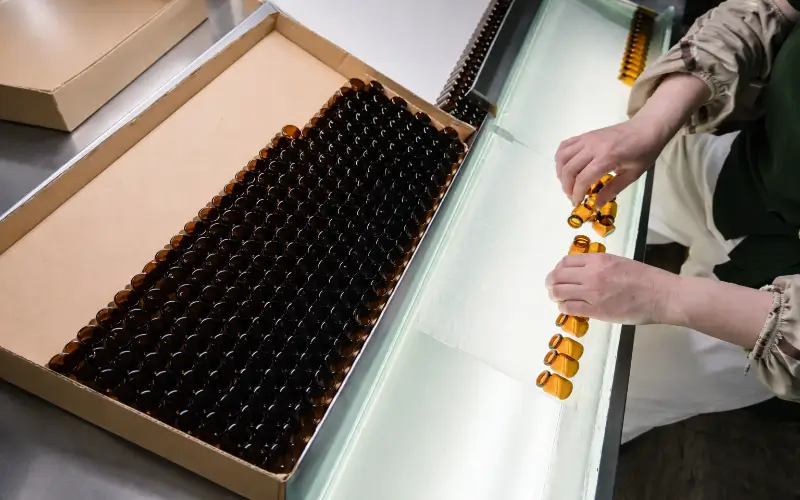
A pre-shipment inspection alone is too late.
By the time goods are fully produced and packed, fixing defects means delaying shipment, renegotiating, or absorbing losses.
When your supplier reports that production is approximately 50% complete, request an inspection of freshly completed units.
Compare them directly against your approved sample — check dimensions, materials, color, and finish.
If anything deviates from the confirmed sample, halt production immediately.
Catching the problem at the halfway point limits your exposure; catching it after full production leaves you with far fewer options.
Conduct a Pre-Shipment Quality Inspection
Before goods leave the factory, conduct a final quality inspection against your approved sample and product specifications.
Check for cosmetic defects, functional issues, correct packaging, correct label applying like Made in PRC label, and accurate quantities. Use an AQL (Acceptable Quality Level) sampling standard to determine how many units to inspect.
For added objectivity, consider hiring a third-party inspection company to conduct on-site inspections at the factory and issue a formal written report.
Standard inspection fees in China typically range from USD 200 to 300 per man-day — a modest cost compared to the expense of receiving a defective shipment.
A third-party report also gives you documented evidence if you need to raise a dispute with your supplier.
Ensure Collaboration between Production and Assembly
Finished products rarely come from a single source.
Most manufactured goods require components from multiple suppliers that are consolidated and assembled before final shipment.
A perfume bottle, for example, consists of a glass body, a spray pump, and a cap — each produced by a different factory and shipped to a central assembly point.
The final delivery date is determined by whichever component arrives last, plus the time needed for transit and assembly.
Map out your supply chain before production begins. Confirm lead times with every component supplier and build in buffer time for delays.
A one-week delay in a single component can push your entire shipment back by weeks.
Step 3: Plan Shipping and Logistics Early
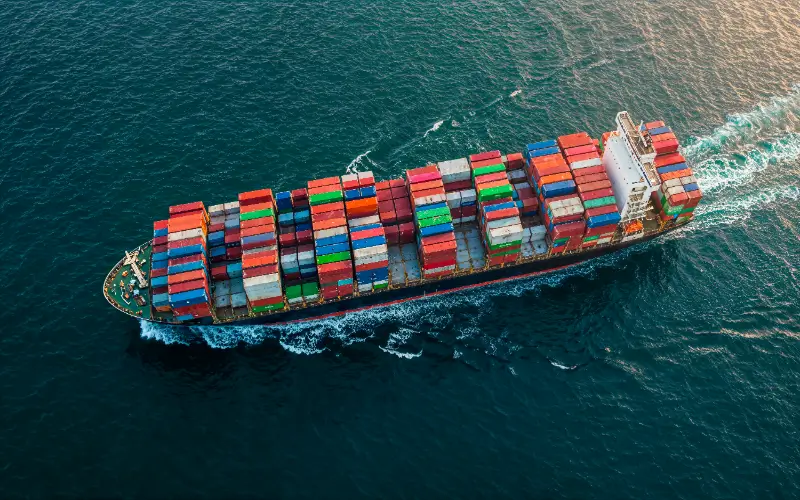
Do not wait until goods are ready to think about shipping solutions.
For large shipments moving by sea freight, container bookings need to be arranged well in advance — often two to four weeks before the cargo is ready.
Leaving this to the last minute risks missing vessel schedules, which can delay delivery by an additional week or more and potentially strand your goods at the factory, incurring unnecessary storage fees. So, the estimated shipping time from China is more than necessary.
Since most factories only provide a 7 to 15-day free warehousing, you should start coordinating with your freight forwarder as soon as production is confirmed.
If you’re an Amazon seller, you might need an Amazon sourcing agent to help you deliver your goods to the Amazon FBA warehouse.
Confirm Your Incoterms
Incoterms define where your supplier’s responsibility ends, and yours begins.
The most common terms for international buyers sourcing from China are:
- EXW (Ex Works) – The supplier’s obligation ends the moment goods are ready at their factory gate. You are responsible for all transportation, export clearance, and costs from that point forward. Maximum control, maximum responsibility.
- FOB (Free On Board) – The supplier delivers goods to the port of origin and handles export clearance. You take over once goods are loaded onto the vessel. The most widely used term for sea freight.
- CIF (Cost, Insurance, Freight) – The supplier arranges and pays for freight and insurance to the destination port. You handle import clearance and onward delivery. Convenient, but you have less visibility into freight costs.
- DDP (Delivered Duty Paid) – The supplier or their freight forwarder handles everything: freight, insurance, customs clearance, and delivery to your door. Maximum convenience, but typically the most expensive option and the least transparent on cost breakdown.
Confirm your Incoterms at the quotation stage — not after.
Supplier quotes in China typically reflect the EXW price, the cost of manufacturing plus the supplier’s margin, with no freight included.
If you are importing for the first time, ask your supplier whether they can arrange freight on your behalf.
If not, engage a freight forwarder directly. A good forwarder will handle booking, documentation, and customs coordination, which significantly reduces the operational burden for first-time importers.
Confirm the HTS and HS code
The HS (Harmonized System) code is an internationally standardized number assigned to your product by your supplier in China, used to classify goods for export.
The HTS (Harmonized Tariff Schedule) code is the US-specific extension of the HS code, used by US Customs to determine the applicable import duty rate.
Your supplier should provide the HS code, but you cannot leave the verification entirely to them.
An incorrect HTS code creates two types of problems:
- If the assigned tariff is higher than it should be, you overpay on duties.
- If it is lower, US Customs will issue a penalty, and if they determine the error was intentional, the fine can equal the full value of your shipment.
For first-time importers, work with a licensed customs broker to verify the correct code before your goods ship. The consultation fee is far less than the cost of a misclassification.
Track Your Shipment in Real Time
Once goods are in transit, maintain active oversight.
For air freight via carriers such as FedEx, UPS, or DHL, standard tracking numbers provide shipment status updates.
For sea freight, your freight forwarder will supply a Bill of Lading number and vessel information, which you can use to track the shipment through the carrier’s website or a tool like Vessel Finder.
Tracking matters because delays happen. The earlier you know about a delay — whether from weather, port congestion, or documentation issues — the more time you have to adjust inventory plans, notify customers, or arrange alternative arrangements.
Once the vessel arrives, have your customs documents prepared in advance so clearance can begin without unnecessary waiting.
Step 4: Navigate Customs Clearance

Customs clearance requires a complete, accurate set of documents. A single missing or incorrect file can freeze your shipment at the port for days.
Prepare the following before your goods arrive:
Bill of Lading (B/L)
The foundational document for your shipment. It identifies the seller, the buyer, the product, the transaction date, and the origin and destination ports. It also serves as proof of ownership. Without it, your goods cannot be released.
Commercial Invoice
Issued by your supplier as proof of sale. Customs uses it to calculate applicable duties and taxes. It must accurately reflect the value, quantity, and description of goods.
Packing List
A declaration document listing the weight, dimensions, and volume of each carton in your shipment. Customs uses it to verify the contents against the commercial invoice.
ISF (Importer Security Filing)
Required for all US imports. Must be filed electronically with the Department of Homeland Security at least 24 hours before goods are loaded onto the vessel. Late filing incurs fines.
Compliance Certificates
Any product-specific certificates required by your destination market, such as CE, FCC, or CPSC test reports.
US Customs randomly selects containers for X-ray inspection. If your container is selected, expect a delay of several days. You cannot prevent this, but you can plan for it by building extra time into your shipping timeline.
Step 5: Pick Up Your Goods
Once customs clearance is approved, confirm the port of discharge and communicate it to your trucking carrier immediately.
A mismatch between where your goods are discharged and where your carrier is dispatched creates delays and additional costs that fall entirely on you.
After clearance, your carrier will begin the pickup process.
Be aware that port congestion can cause further delays, even after customs approval — cleared goods may be held in a restricted area until the port clears the backlog ahead of you.
This can add anywhere from a few days to a week. Stay in regular contact with both your carrier and your freight forwarder during this period so you can adjust your receiving timeline accordingly.
Hire HiSourcing as Your Sourcing Partner
As you can see, learning exactly how to source products from China involves a steep learning curve.
From vetting disguised trading companies and negotiating MOQs to managing mid-production quality checks and navigating complex customs paperwork, every step carries financial risk.
For first-time importers or businesses looking to scale without hiring a full-time procurement team, managing this entire supply chain across different time zones is exhausting.
That is where a China sourcing agent like HiSourcing steps in.
Instead of flying across the world or staying up until 3 AM to check on a delayed shipment, you can hand the heavy lifting to us. We act as your dedicated, on-the-ground team in China, protecting your interests at every stage of the process.
Here is how we turn a complicated supply chain into a seamless experience:
- Direct Factory Verification: We separate the real manufacturers from the middlemen. We visit the production floors, check the licenses, and verify capacity, so you don’t have to.
- End-to-End Quality Control: We conduct strict mid-production and pre-shipment inspections, catching deviations and defects before your goods ever get loaded into a shipping container.
- Favorable Negotiations: Leveraging our local network and language fluency, we secure authentic factory-direct pricing, realistic lead times, and manageable MOQs.
- Logistics & Customs Consolidation: Whether you need parts assembled from three different factories or a streamlined DDP shipping solution, we coordinate the freight, track the vessels, and ensure your customs paperwork is flawless.
Sourcing overseas shouldn’t be a guessing game. If you want to eliminate the pitfalls, protect your margins, and focus strictly on growing your brand, let HiSourcing handle your supply chain.
Further Reading:


