
Is Alibaba Safe to Buy From? The short answer is yes, Alibaba is safe to buy from, but only if you understand what ‘safe’ actually means on a marketplace that hosts millions of independent suppliers.
As an Alibaba sourcing company based in Yiwu, China, the world’s largest wholesale market, every week, we meet importers who find us after a bad Alibaba experience: a sample that didn’t match the bulk order, a factory that turned out to be a guy in a rented office, a wire transfer that vanished. We also work with importers who have been buying from Alibaba for years without a single problem.
The difference between these two groups isn’t luck. It’s a specific set of habits, and a specific understanding of what Alibaba really is.
This guide is going to tell you three things you won’t read on Shopify, Forbes, or any dropshipping blog: what Alibaba actually is from the inside, where Trade Assurance silently fails, and why the price you see on Alibaba isn’t the real price of anything in China.
The Short Answer
Yes, Alibaba is a legitimate company. It’s listed on the New York Stock Exchange, it processes billions of dollars in B2B transactions every year, and the vast majority of suppliers on the platform are real businesses doing real trade.
But “Alibaba is safe” is not the same as “buying on Alibaba is safe for you.” Alibaba is a directory. The risk doesn’t come from Alibaba itself. It comes from the supplier you choose, the payment method you use, and the assumptions you bring to the platform.
If you treat Alibaba like Amazon, you will lose money. If you treat it like a trade show catalog where you still need to verify every booth, you’ll be fine.
What Alibaba Actually Is (And Isn’t)
Alibaba.com is a B2B directory connecting overseas buyers with suppliers in China. It is not a retailer, not a quality control service, and not a guarantee of supplier legitimacy. When you click “Contact Supplier,” you are starting a private business relationship with an independent company that pays Alibaba to be listed.
Two things almost no other guide will tell you:
First, most factories on Alibaba are not factories. They are trading companies, middlemen who source from real factories and resell with a markup.
Walking through the supplier listings in Yiwu, our rough estimate is that 70 to 80 percent of suppliers labeled as Manufacturer are actually trading companies. This isn’t necessarily bad. Trading companies often have lower MOQs, better English, and faster response times. But you should know what you’re paying for, and you should never assume the price you’re getting is the factory floor price.
Second, Alibaba is the export-facing storefront of China, not the wholesale price floor. The actual domestic wholesale platform Chinese buyers use is 1688.com, 1688 and Alibaba are owned by the same parent company.
The same product, from the same supplier, often costs 30 to 60 percent less on 1688 than on Alibaba. We see this every day. A stainless steel water bottle quoted at $2.40 on Alibaba sells for $1.20 on 1688 from the same factory.
The difference is the export-facing infrastructure: English support, Trade Assurance, marketing fees, and the assumption that you can’t read Chinese or visit the factory yourself.
This doesn’t mean Alibaba is a scam. It means the prices you see are wholesale prices for foreign buyers, not the cheapest possible prices in China. Knowing this saves you from one of the most common Alibaba mistakes: assuming you’ve found a great deal when you’ve actually paid the export tax.
The Real Risks of Buying from Alibaba
Forget the generic “watch out for scams” advice. Here are the six things that actually go wrong, ranked by how often we see them in real importer cases.
Risk 1: Trading Companies Posing as Factories
The most common issue, and the most invisible. A trading company will list itself as “Manufacturer,” show factory photos that belong to one of its supplier partners, and quote you prices with their markup baked in.
You’re not being scammed in the legal sense because you’re getting a real product. But you’re paying 15 to 30 percent more than you would going direct, and you have no control over which factory actually makes your goods.
How to spot it: ask for a video factory tour, live and unedited, with the supplier walking from the office to the production line. Real factories will do this. Trading companies will stall, send pre-recorded clips, or claim “production line not running today.”
Risk 2: The Verified Badge Is Paid, Not Earned
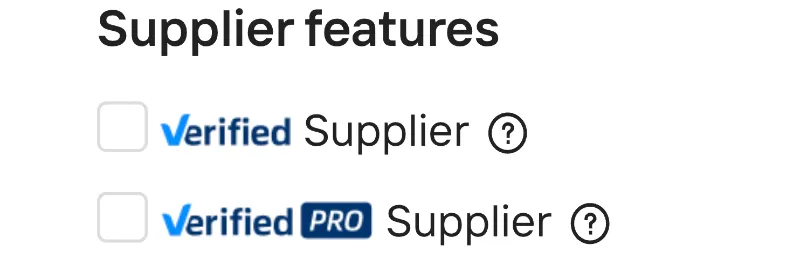
Verified Supplier badges sound like third-party audits. It is partial audits at best, paid memberships at worst. A Verified Supplier has had a third-party agency confirm the company exists and has the floor space they claim.
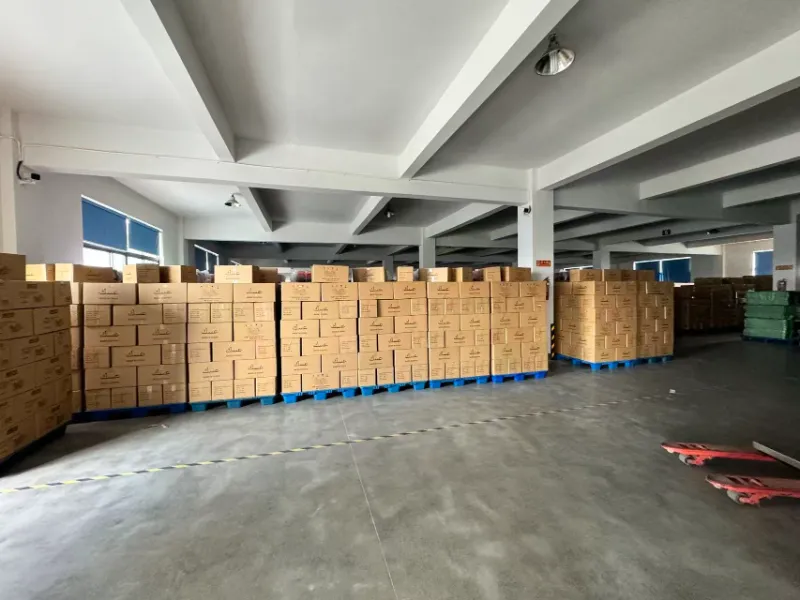
It does not mean the supplier is trustworthy, that their products meet your quality standards, or that they specialize in what they’re selling you.We’ve personally walked into “Verified” facilities in Zhejiang that were warehouses with no production happening, just inventory shipped in from elsewhere. The badge is a starting filter, not a finish line.
Risk 3: Quality Fade
You receive a perfect sample. You approve it. You pay for the bulk order. The bulk order arrives, and the materials are thinner, the stitching is worse, and the color is slightly off. This is called quality fade, and it is the single biggest reason importers come to us in tears.
Quality fade happens because the sample was made by the supplier’s best worker on their best day, while the bulk order is made under production-line pressure with cheaper materials to protect the supplier’s margin.
Trade Assurance can sometimes recover money for this, but only if you have a detailed written product specifications sheet, quality checklist, and reports, which most first-time buyers don’t have.
Risk 4: MOQ Bait-and-Switch
The listing says MOQ 100 pieces. You message the supplier, and they suddenly require 500 pieces, or 100 pieces at 3x the listed price. This is technically not a scam, but it’s a waste of your time and a red flag that the supplier doesn’t actually stock the product they’re advertising.
Risk 5: Off-Platform Wire Transfer Scams
The single most dangerous scam, and 100 percent preventable. The supplier, sometimes a legitimate one whose account has been hacked, sometimes a fake from the start, asks you to wire payment to a personal Hong Kong bank account “because Trade Assurance is having problems” or “because of a small discount.” You wire the money. The supplier disappears.
If anyone on Alibaba asks you to pay outside the platform, the conversation is over. There are no exceptions. No legitimate supplier needs you to wire money to a personal account.
Risk 6: Counterfeit and Branded Goods
If you see Nike, Adidas, Disney, or any luxury brand on Alibaba at a fraction of retail price, it is fake. Alibaba has anti-counterfeiting programs and removes listings, but new ones appear every day. Buying counterfeit goods isn’t just a quality risk, it’s a legal risk in your destination country. Customs will seize the shipment, and you may face fines.
Further reading:
Trade Assurance: How It Actually Works (and When It Fails)
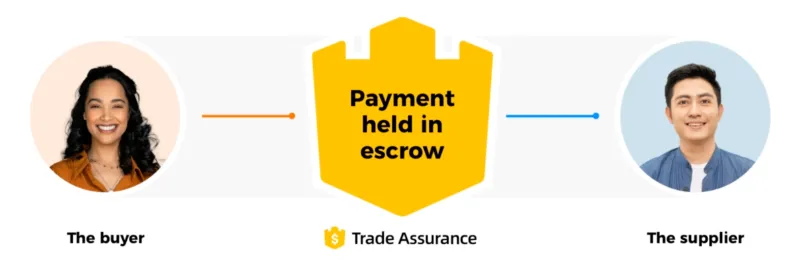
Trade Assurance is Alibaba’s escrow service. You pay through Alibaba, the money is held until you confirm the goods arrived as agreed, and Alibaba mediates if there’s a dispute. It’s free. You should use it on every order. Use the bold version: always pay through Trade Assurance, never wire money to a personal account.
That said, Trade Assurance is not the bulletproof shield most blogs make it out to be. Here’s what it doesn’t reliably cover:
- Vague specifications.If your contract says “blue water bottles” and the supplier ships blue water bottles that happen to be the wrong shade of blue, Alibaba will not refund you. You need specific Pantone codes, written material specs, and pre-approved samples documented in the order.
- Quality disputes without third-party inspection. If you claim the goods are defective but didn’t book a pre-shipment inspection, it’s your word against the supplier’s. Alibaba’s mediation usually splits the difference, which means you eat half the loss.
- Time delays in your favor. Alibaba’s dispute resolution can take 30 to 90 days. If you need the inventory for a launch, the timeline alone may force you to accept a bad deal.
- Quantity disputes after acceptance.Once you click “confirm receipt,” Trade Assurance protection ends. If you discover a shortage three days later, you have no recourse.
Trade Assurance does work. Just don’t treat it like a magic wand.
How to Verify an Alibaba Supplier in 10 Minutes
Five steps. Do all of them before you send a single dollar.
Step 1: Check the business license on Qichacha
Qichacha (企查查) is China’s public business registry. Any legitimate Chinese company is listed there. Ask the supplier for their full company name in Chinese, search it on qcc.com, and verify the registration date, registered capital, business scope, and legal representative match what’s on Alibaba. If the supplier won’t give you a Chinese name, walk away.
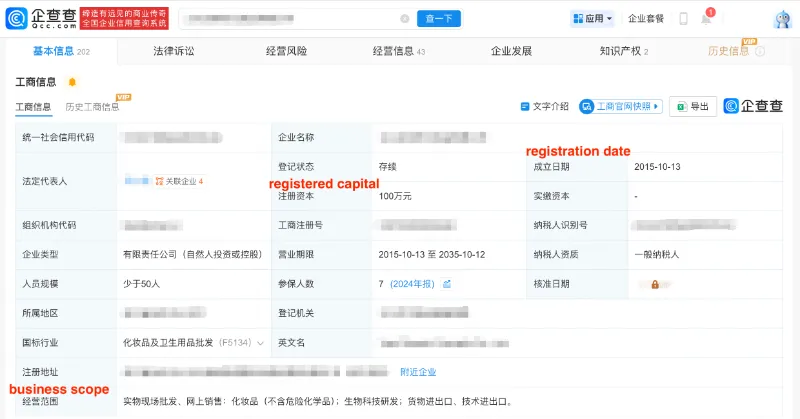
Do note that websites like that may need a WeChat account to scan and log in before using.
Step 2: Demand a live video factory tour
Not a recorded clip. A live WhatsApp or WeChat video call where the salesperson walks from the office to the production floor. You want to see workers, machines actually running, raw material inventory, and finished goods packaging. If they make excuses, they’re hiding something.
Step 3: Check product category specialization
Click into the supplier’s full product catalog. A real factory makes one type of thing. If a “stainless steel bottle factory” also lists yoga mats, USB cables, and silicone phone cases, it’s a trading company sourcing from anywhere. This isn’t disqualifying, but you should price accordingly and never pay factory-direct prices.
Step 4: Ask for a recent production video, not a product photo
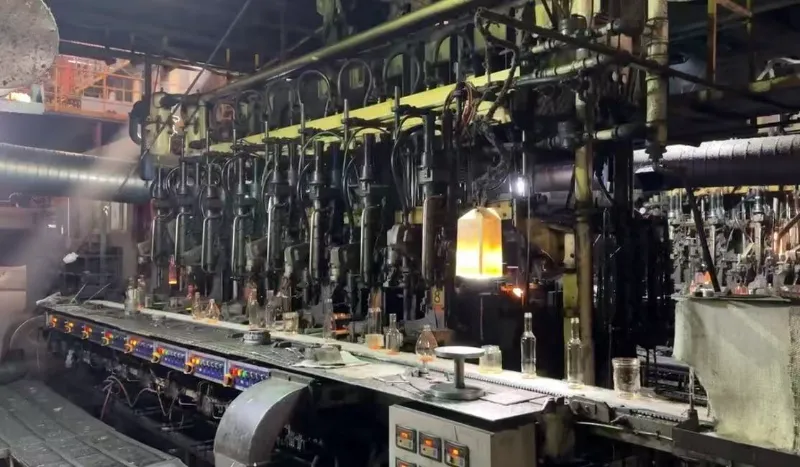
Product photos are easy to steal. A 30-second video of the actual production line making your specific product, taken this week, with today’s date written on a piece of paper visible in the frame, is hard to fake.
Step 5: Reverse-search the company name with scam appended
Google “[full company name] scam” and “[full company name] reviews.” Check Reddit, forum complaints, and any blacklists. If the supplier has burned someone before, it’s usually findable in 5 minutes.
These five steps catch maybe 90 percent of the suppliers you should avoid. They will not catch a sophisticated trading company that’s just charging you a markup. For that, you may need someone on the ground in China, like a sourcing agent.
Safest Payment Methods on Alibaba
| Payment Method | Risk Level | Best For |
|---|---|---|
| Alibaba Trade Assurance | Lowest | Every order. Always your default. |
| Letter of Credit (L/C) | Low | Large orders ($30K+). Bank-mediated, but slow and expensive. |
| PayPal | Low-Medium | Sample orders only. Most factories won’t accept it for bulk. |
| Credit card (via Alibaba) | Medium | Small orders. Higher fees. Gives you chargeback rights. |
| Bank wire (T/T) to company account | Medium-High | Repeat suppliers you’ve vetted in person. Never first orders. |
| Wire to personal account | Critical | Never. No exceptions. This is how scams work. |
| Western Union / MoneyGram | Critical | Never. Untraceable. |
The rule is simple: Do NOT pay an Alibaba supplier off-platform. It would be highly likely to get scammed if the supplier asks for a back transfer.
Further reading:
I Got Scammed on Alibaba: The Ultimate Recovery & Prevention Guide 2026
Is Alibaba Safe to Buy From in Your Country?
Alibaba operates in 190+ countries, but the buying experience varies. The platform itself works the same everywhere; the differences are in payment, customs, and what scams target you specifically.
| Country | Most Common Issue | Notes |
|---|---|---|
| United States | Tariffs eating margins, Section 301 duties on Chinese goods | Trade Assurance fully supported. Use credit card for small orders. |
| United Kingdom | VAT on imports over £135, customs delays | Trade Assurance supported. Watch for HMRC compliance. |
| Canada | Duty calculation surprises | Trade Assurance supported. Consider customs broker for orders over CAD 2,500. |
| Australia | Long shipping times, biosecurity inspections | Trade Assurance supported. GST applies to all imports. |
| India | Trade Assurance has historically had issues; some scammers exploit this | Verify TA is active for your specific transaction. Use PayPal as backup for samples. |
| Philippines | High customs duties, slow clearance | Trade Assurance supported. Use a local customs broker. |
| South Africa | Limited supplier willingness to ship | Confirm shipping cost upfront. Trade Assurance supported. |
If a supplier ever tells you “Trade Assurance doesn’t work in your country,” they’re lying. Trade Assurance is global. That sentence is a scam signal, disengage immediately.
When You Should Not Use Alibaba
Alibaba works well for stock products, simple customizations, and orders where the cost of failure is low. It works poorly in three situations.
First, complex custom products. If your product requires precise tolerances, technical drawings, or proprietary materials, the back-and-forth required to get it right is brutal over Alibaba’s messaging system. You need someone who can stand in the factory and translate.
Second, high-value first orders. If you’re sending $20,000 to a supplier you’ve never met, on a product you’ve never inspected, you’re taking on risk that’s wildly out of proportion to any savings. The cost of being wrong is your entire budget.
Third, when you need speed and accountability. Alibaba disputes take weeks. Quality issues are discovered after the container has left the port. If your business depends on inventory arriving on time and on spec, you need someone managing the production locally, not a chat thread with a salesperson 8,000 miles away.
This is where a China sourcing agent walks in. A good agent visits the factory, negotiates in Mandarin, manages the production timeline, and inspects the goods before they ship. At HiSourcing, we do this on a no-service-fee basis from our office in Yiwu, which means our incentive is aligned with yours: get you the right product at the right price from the right factory.
If you’re spending more than $5,000 on a first order, the question isn’t “is Alibaba safe,” it’s “do I want to handle this alone, or do I want someone in China handling it for me?”
Final Thoughts
Alibaba is safe to buy from in the same way a major city is safe to walk through: legitimate, busy, full of opportunity, and full of people who are happy to take advantage of you if you’re paying attention to the wrong things.
The honest answer to “Is Alibaba safe to buy from?” is: yes, but the question you should actually be asking is whether you have the time, the language skills, and the China-side knowledge to use it well. If the answer is no, the smart move isn’t to avoid Alibaba, it’s to bring in someone who can use it properly on your behalf.
If you’d like someone to be us, reach out for a free sourcing consultation. We’re based in Yiwu, work on a no-service-fee model, and the first conversation costs nothing. Feel free to Contact Us.
Frequently Asked Questions (FAQs)
Is Alibaba 100% safe?
No platform is 100% safe. Alibaba is as safe as any major marketplace as long as you use Trade Assurance, verify suppliers properly, and never pay outside the platform. The risk is not Alibaba — it’s the individual supplier you choose.
Why is Alibaba so cheap?
Alibaba is actually not the cheapest source in China. Chinese domestic buyers use 1688.com, which lists the same products from the same suppliers at 30-60% lower prices. Alibaba prices include export-facing services like English support, Trade Assurance, and marketing costs. The platform looks cheap compared to retail in your home country, but you’re not getting Chinese factory-floor prices.
Is Alibaba banned in India?
Alibaba.com is not banned in India and remains accessible. UC Browser and some other Alibaba Group apps were banned in 2020, but the B2B marketplace continues to operate normally for Indian buyers.
Can I trust Alibaba with my credit card?
Yes, when paying through Alibaba’s official checkout. Your card details go through Alibaba’s payment system, not directly to the supplier. If a supplier asks you to provide your credit card details outside the platform, refuse — that’s a fraud signal, not a payment method.
Which is better, Alibaba or Amazon?
They serve different purposes. Amazon Business is a B2B retail platform for buying small quantities of finished goods, mostly from US-based sellers. Alibaba is a wholesale platform for buying directly from manufacturers in bulk, mostly from China. If you want to start a private-label business, Alibaba is where you source. If you need 50 units of something next week, Amazon Business is faster.
Is the Alibaba app safe to download?
Yes. The official Alibaba.com app on the Apple App Store and Google Play is published by Alibaba Group and is safe. Be careful of unofficial APKs or apps with similar names — those may be phishing tools.
Are all Alibaba sellers verified?
No. Alibaba has multiple verification levels — Free, Gold Supplier, and Verified Supplier — and most sellers have either Gold or Verified status because it’s required for serious B2B activity. But verified only means Alibaba has confirmed the company exists. It does not mean the supplier is trustworthy, and it doesn’t guarantee product quality.


